Why Tensions Between Afghanistan and Pakistan Have Erupted into Fighting
Why Tensions Between Afghanistan and Pakistan Have Erupted into Fighting For the first time in years, Pakistan and Afghanistan have seen a dramatic escalation in violence, with th…
Why Tensions Between Afghanistan and Pakistan Have Erupted into Fighting
Why Tensions Between Afghanistan and Pakistan Have Erupted into Fighting
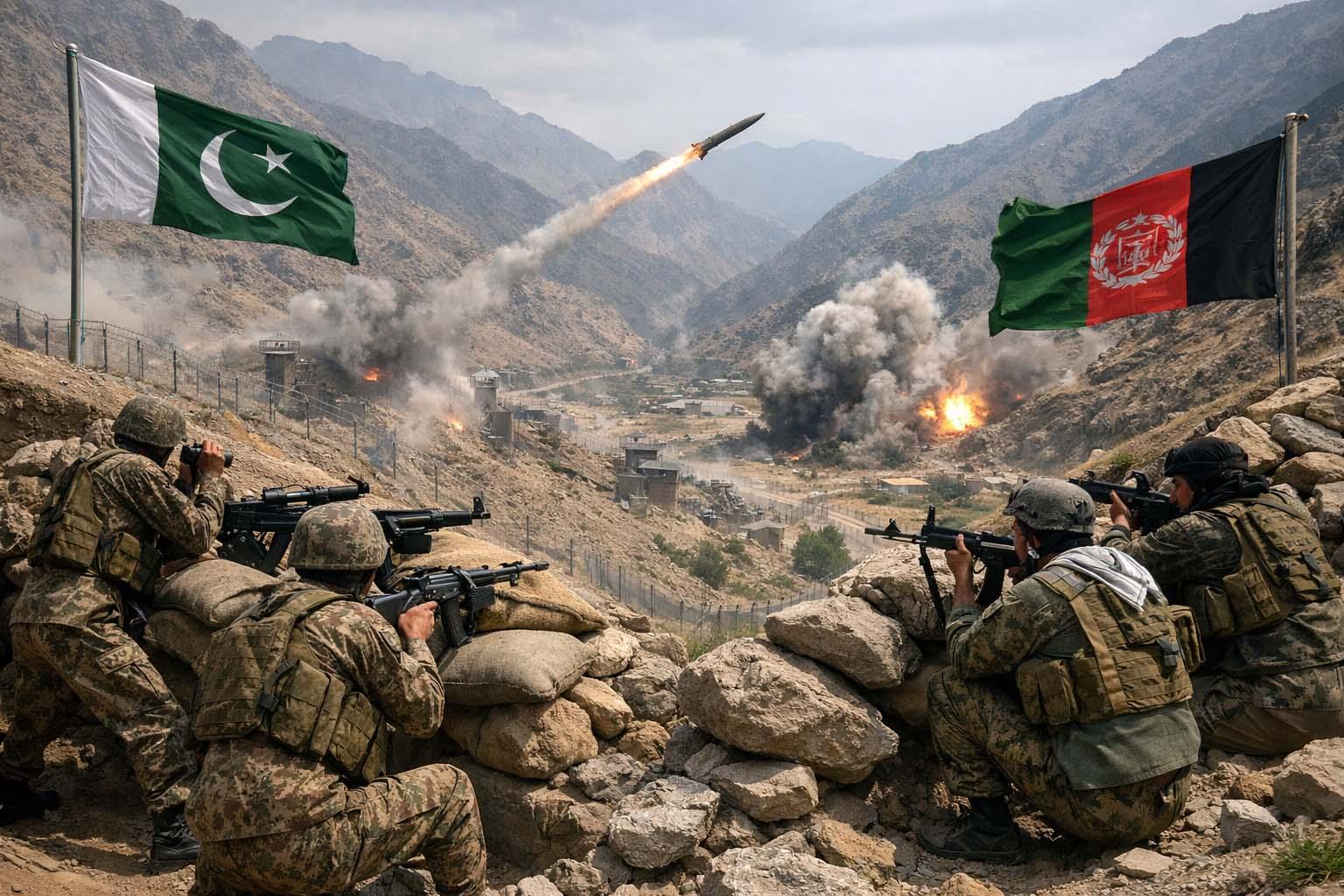
For the first time in years, Pakistan and Afghanistan have seen a dramatic escalation in violence, with the two neighbours trading strikes and accusations in what many officials describe as an all-out confrontation. What might once have seemed unlikely — open conflict between two sovereign states sharing deep cultural and historical ties — is now unfolding along their long, rugged frontier.
A Historic and Complicated Border
The border between the two countries stretches for about 2,600 km and is known as the Durand Line. This boundary was drawn during the British colonial period in 1893 and is recognised by Pakistan as its official frontier. Afghanistan, however, has never formally accepted it, viewing the line as an arbitrary division that cut through Pashtun and Baloch tribal lands. This dispute has simmered since Pakistan’s creation in 1947 and has long complicated relations between Kabul and Islamabad.
The region where the two states meet has historically been porous and difficult to govern, with tribal communities, shared languages, and family ties spanning either side. This has made military and border control especially challenging for both governments and has allowed armed groups to operate across the boundary relatively freely.
From Strategic Partners to Bitter Rivals
At various points in recent history, Pakistan and the group that now runs Afghanistan — the Taliban — were seen as close allies. In the 1990s and again during the US-led war in Afghanistan after 2001, Islamabad maintained relations with Taliban elements. But the dynamics changed significantly after the Taliban returned to power in Kabul in 2021 following the withdrawal of US and NATO forces.
Pakistan now accuses the Afghan Taliban government of providing sanctuary to militant groups that launch attacks inside Pakistan. One of the most contentious of these is the Tehreek-e-Taliban Pakistan (TTP) — a militant organisation separate from the Afghan Taliban but closely linked in ideology and personnel. Islamabad says that TTP fighters, and allied groups such as the Islamic State – Khorasan Province (ISKP), operate from bases within Afghanistan and carry out suicide bombings, raids, and assaults inside Pakistan.
The Afghan government repeatedly denies harbouring these militants or condoning attacks on Pakistan — insisting that it does not allow its territory to be used as a base for armed offensives. But Pakistan argues that Kabul has not done enough to stop the insurgents. This accusation has been a central source of friction and distrust between the two governments.
Recent Escalation of Violence
Tensions boiled over in October 2025, when months of low-level clashes along the border erupted into serious fighting. A ceasefire was negotiated by regional mediators, including Qatar and Turkey, but it failed to produce a long-lasting peace. Sporadic skirmishes continued throughout the winter months.
In February 2026, violence again intensified. Pakistan carried out a series of airstrikes inside eastern Afghanistan targeting what it described as militant camps belonging to the TTP and ISKP in provinces such as Nangarhar and Paktika. Islamabad said these strikes were a justified response to a wave of attacks inside Pakistan — including a suicide bombing in the capital Islamabad and a deadly militant assault in the Bajaur border region — that it blamed on militants based in Afghanistan.
Afghan officials condemned the air raids as a blatant violation of their sovereignty and accused Pakistan of killing civilians, including women and children. They vowed to respond. That response came when Afghan forces launched strikes of their own inside Pakistan, using artillery and drones against military outposts near the frontier. This in turn provoked a larger Pakistani military operation, with air attacks reported in multiple Afghan cities, including Kabul and Kandahar.
Why Now? A Convergence of Issues
Experts and analysts say there are several overlapping reasons the conflict has escalated so sharply:
Militant violence and security threats: Cross-border attacks blamed on militants have eroded trust and raised fears in Islamabad that its national security is at risk.
Border control breakdown: The Durand Line remains contested and poorly controlled, allowing fighters to cross back and forth with ease.
Refugee and migration pressures: Pakistan’s crackdown on undocumented migrants — most of whom are Afghan — has fuelled resentment and diplomatic disputes, adding another layer of tension.
Geopolitical rivalries: Both countries also view regional relationships through the lens of broader competition, including the role of neighbouring India, which Pakistan often accuses (without evidence) of supporting anti-Islamabad groups.
Human Cost and International Concern
The conflict has already caused civilian casualties and displaced families on both sides of the border. United Nations agencies and international governments have called for restraint and diplomacy, warning that an expanded war between two nuclear-armed neighbours would have devastating consequences for regional stability.
Despite intermittent truce efforts and diplomatic talks, deep mistrust persists, making a sustainable peace difficult to achieve. Unless both sides address the underlying security concerns and the border question, analysts warn, tensions could continue to flare and spill over into more destructive conflict.
No comments yet.