The Three Most Dangerous Crocodile Species Responsible for Most Human Attacks
An in-depth look at saltwater, Nile, and mugger crocodiles, highlighting their size, behavior, habitats, and why they are responsible for most human attacks worldwide.
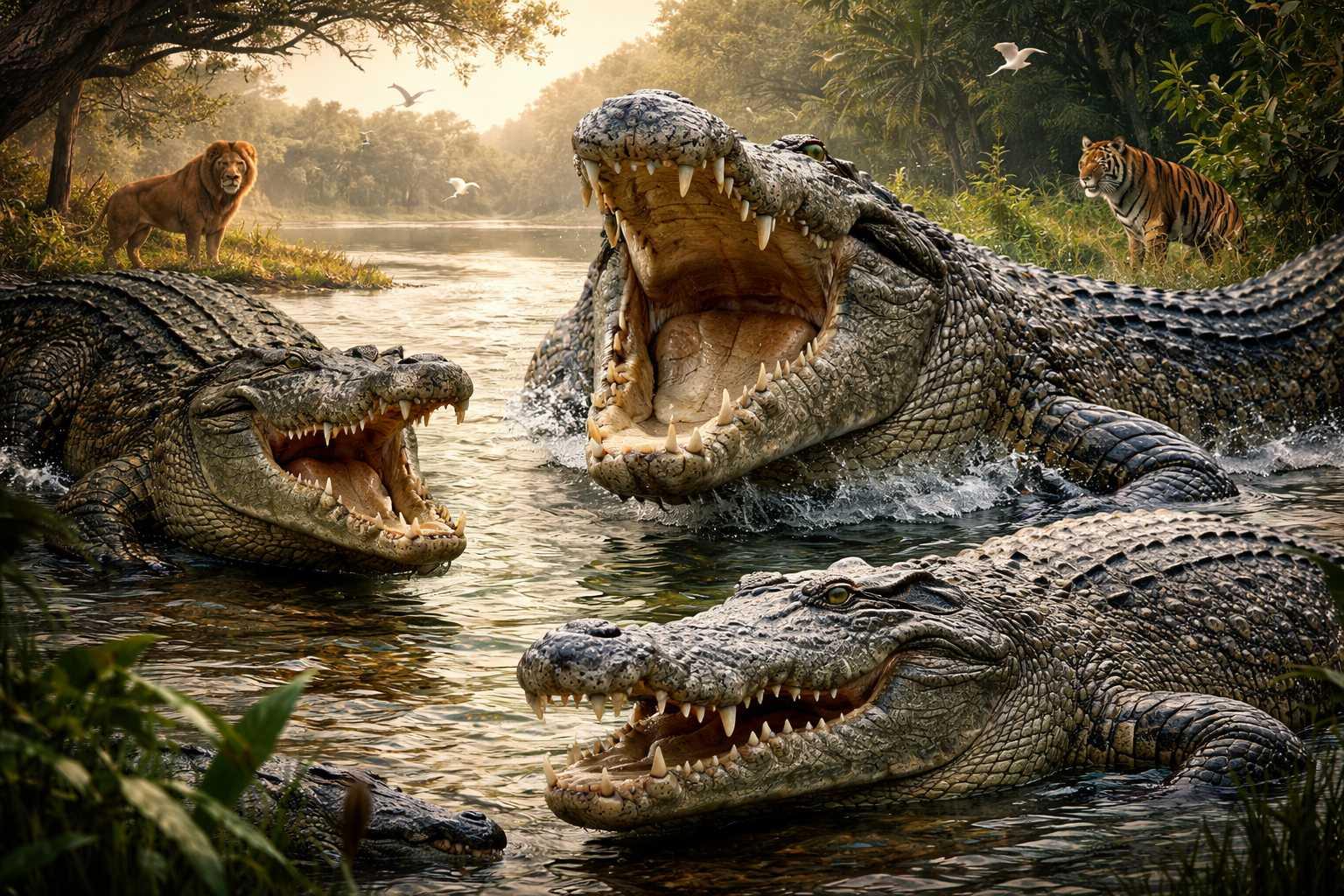
Crocodiles are among the most formidable predators on Earth, dominating rivers, lakes, and coastal regions with unmatched strength, stealth, and survival instincts. Among the many species that exist today, the Saltwater crocodile, Nile crocodile, and Mugger crocodile stand out not only for their size and power but also for their frequent interactions with humans, often leading to dangerous encounters. These reptiles are also known to hunt big cats occasionally with Nile Crocodiles being known to hunt lions in African Rivers, while the Saltwater crocodiles and Mugger crocodiles are known to hunt tigers in the rivers of Asia. Their adaptability, aggressive hunting strategies, and overlapping habitats with human populations make them some of the most feared and fascinating creatures in the natural world.
Saltwater Crocodile
The saltwater crocodile (Crocodylus porosus) is the largest living reptile on Earth and one of the most powerful predators in the animal kingdom. Found across parts of Asia and Australia, it is known for its size, strength, and ability to survive in diverse aquatic environments.
Physical Size and Power
Saltwater crocodiles are enormous, with adult males typically reaching about 17 feet in length and weighing around 1,000 pounds, though some can grow much larger. Exceptional individuals may exceed 20 feet and weigh over a ton, making them the heaviest reptiles alive. Their massive jaws and muscular bodies allow them to dominate nearly any environment they inhabit.
Habitat and Range
These crocodiles have a vast geographic range, living in rivers, estuaries, mangroves, and coastal regions from eastern India through Southeast Asia to northern Australia. They are excellent swimmers and can travel long distances in the ocean, which helps explain their wide distribution across islands and coastlines.
Hunting and Diet
Saltwater crocodiles are opportunistic predators that rely on stealth and patience. They often wait just below the water’s surface near the shore, ready to ambush prey. Their diet is extremely varied, including fish, birds, mammals, and even large animals like water buffalo. Once they attack, they drag prey underwater and drown it before feeding.
Behavior and Survival
These reptiles are highly adaptable and can survive in both freshwater and saltwater environments. They are mostly solitary and territorial, especially large males. With a lifespan of up to 70 years in the wild, they are long-lived and resilient predators that have changed little over millions of years.
Threats and Conservation
Although saltwater crocodiles are currently classified as a species of low concern, they still face threats from habitat loss and illegal hunting for their valuable skins. Additionally, conflicts with humans—due to attacks on livestock and people—often lead to retaliation, which can impact local populations.
Nile Crocodile
The Nile crocodile (Crocodylus niloticus) is one of Africa’s most powerful and feared predators. It is a large carnivorous reptile known for its strength, adaptability, and long history alongside human civilizations. Found widely across sub-Saharan Africa and Madagascar, it has earned a reputation as a dangerous animal due to frequent encounters with humans.
Size and Physical Characteristics
Nile crocodiles are among the largest reptiles in the world. Adults typically reach about 16 feet in length and weigh around 500 pounds, though some individuals can grow up to 20 feet and become much heavier. Their bodies are covered in thick, armored skin, and they possess powerful jaws and long tails that help them dominate both land and water environments.
Habitat and Distribution
These crocodiles live in a wide range of freshwater habitats, including rivers, lakes, marshes, and mangrove swamps. Their distribution spans much of sub-Saharan Africa, including the Nile Basin, as well as parts of Madagascar. Their ability to thrive in different aquatic environments makes them one of the most widespread crocodile species.
Diet and Hunting Behavior
Nile crocodiles are opportunistic carnivores with a highly varied diet. While fish make up a large portion of their food, they will attack almost any animal that comes near the water, including birds, antelope, zebras, and even other crocodiles. They rely on stealth, lying motionless near the water’s edge before launching sudden ambush attacks and dragging prey underwater to drown it.
Behavior and Interaction with Humans
This species has a strong reputation as a man-eater, and interactions with humans are relatively common due to shared water sources. Hundreds of attacks are reported each year, especially in rural areas where people depend on rivers for daily activities. Their aggressive nature and indiscriminate feeding habits make them one of the most dangerous large reptiles.
Reproduction and Survival
Unlike many reptiles, Nile crocodiles show notable parental care. Females lay eggs in nests along riverbanks and guard them fiercely until they hatch. Parents may even help hatchlings emerge and protect them during their early life. Although they were once heavily hunted, conservation efforts have helped stabilize populations, though threats like habitat loss and pollution still exist in some regions.
Mugger Crocodile
The mugger crocodile (Crocodylus palustris), also known as the marsh crocodile, is a freshwater reptile native to South Asia. It is widely found from southeastern Iran to the Indian subcontinent, living in rivers, lakes, ponds, and marshes. Its name comes from the Hindi and Urdu word magar, meaning “water monster,” reflecting its powerful presence in aquatic habitats.
Physical Features and Size
The mugger is a medium-to-large crocodile distinguished by having the broadest snout among all crocodile species. Adults typically grow between 4 to 5 meters (13–16 feet) and can weigh several hundred kilograms. Their coloration ranges from gray to brown, often with darker patches, while juveniles display more distinct bands and markings. Its robust body and alligator-like appearance make it easily recognizable.
Habitat and Lifestyle
Mugger crocodiles inhabit a variety of freshwater environments, including slow-moving rivers, marshes, and artificial reservoirs. They divide their time between land and water, often basking in the sun to regulate body temperature. To cope with extreme heat or cold, they dig burrows that provide shelter. They may also travel across land in search of water, especially during dry seasons.
Diet and Hunting Behavior
These crocodiles are apex predators and opportunistic feeders. Their diet includes fish, birds, amphibians, mammals, and occasionally other crocodiles. They are ambush hunters, lying still in water until prey comes close, then striking suddenly. Remarkably, muggers have been observed using sticks as tools to lure birds looking for nesting material—one of the rare examples of tool use in reptiles.
Reproduction and Life Cycle
Mugger crocodiles follow a polygynous mating system, where one male mates with multiple females. Females lay around 25–30 eggs in burrows during the dry season and guard them until hatching. Both parents may help transport hatchlings to water and protect them for about a year. Females mature earlier than males, and the species can live for more than 30 years.
Conservation and Threats
The mugger crocodile is classified as a vulnerable species due to habitat loss, human conflict, and poaching. Expansion of agriculture and urban areas has reduced its natural habitat, while fishing activities and retaliatory killings also threaten its survival. Despite these challenges, conservation efforts have helped stabilize some populations across its range.
No comments yet.