Pakistan and Afghanistan Escalate into Full-Scale Military Confrontation
Pakistan and Afghanistan Escalate into Full-Scale Military Confrontation Tensions between Pakistan and Afghanistan have sharply worsened, with Islamabad's forces carrying out air…
Pakistan and Afghanistan Escalate into Full-Scale Military Confrontation
Pakistan and Afghanistan Escalate into Full-Scale Military Confrontation
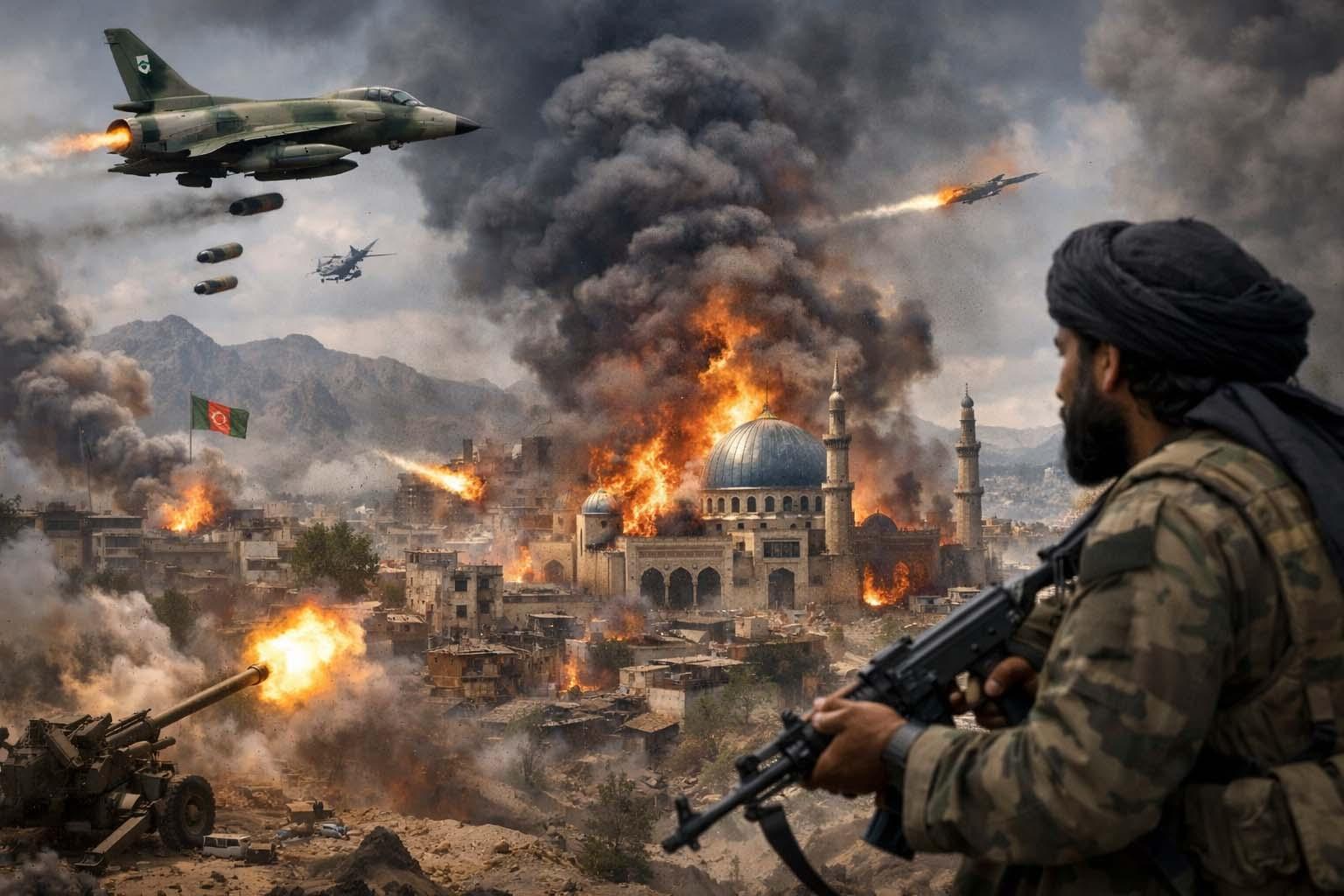
Tensions between Pakistan and Afghanistan have sharply worsened, with Islamabad’s forces carrying out air and artillery strikes on Afghan cities — including the capital Kabul and Kandahar — marking one of the most serious escalations since the Taliban returned to power in 2021. Officials in both countries say they now face widespread violence along their shared border and beyond, as cross-border attacks and counter-attacks intensify.
A Dramatic Turn in Relations
On 27 February 2026, Pakistan’s military launched bombardments in major Afghan population centres, including Kabul — an unprecedented move against a neighbouring capital — along with strikes in Kandahar and Paktia provinces, according to Pakistani officials. Islamabad’s defence establishment portrayed the operation as a retaliatory counter-offensive and said it targeted militant positions and Taliban government facilities.
Pakistan’s defence minister, Khawaja Mohammad Asif, publicly declared that the confrontation had entered a stage of “open war”, indicating Islamabad no longer saw the conflict as limited border clashes but as a full-scale military dispute. Pakistani leaders said their forces had destroyed numerous Taliban posts and inflicted heavy casualties on the Afghan side.
Mutual Claims and Conflicting Reports
The two governments have offered very different versions of events and casualty figures, making the true impact hard to verify independently. Pakistani officials claimed the latest strikes killed 133 Taliban fighters and wounded more than 200, asserting that multiple military posts and infrastructure had been demolished. They also insisted their offensive was justified as a response to ongoing cross-border attacks and militant threats emanating from Afghan territory.
In contrast, Afghanistan’s Taliban government acknowledged Pakistan’s aerial operations but disputed the scale of casualties. Kabul said it had retaliated with its own air and drone strikes against Pakistani military sites, including areas near Islamabad and other cities, causing losses on the Pakistani side — a claim Islamabad denied, saying its air defences had repelled such attempts.
Afghan authorities also accused Pakistan of violating their sovereignty, and reported that civilians — including women and children — were injured in the exchange of fire, particularly near border areas like the Torkham crossing. Afghanistan said it had captured military posts and inflicted casualties on Pakistani troops in ground operations along the Durand Line — the long, disputed frontier separating the two nations.
Background to the Escalation
The flare-up comes after months of persistent tension along the Afghan-Pakistan border, which has seen sporadic violence and intermittent ceasefires since late 2025. Islamabad has accused the Afghan Taliban government of harbouring armed groups, notably the Tehreek-e-Taliban Pakistan (TTP), which Islamabad blames for a surge in violence within Pakistan. Kabul has repeatedly rejected these allegations, insisting it does not allow its territory to be used as a base for attacks.
This conflict is rooted in long-standing distrust between the neighbours: the porous Durand Line has allowed fighters and insurgents to move frequently across the frontier, and both sides have historically accused the other of complicity in cross-border militancy. Attempts at negotiated truces — including efforts brokered by Qatar and Turkey in late 2025 — had provided temporary respites but ultimately failed to produce lasting peace.
Human and Diplomatic Fallout
The latest escalation has triggered alarm among regional and international actors. United Nations officials and several governments have called for immediate de-escalation, warning that the conflict threatens civilian lives and could destabilise a broader region already fraught with insurgency and displacement.
Both countries have also experienced casualties on their home soil. Militancy linked to groups Islamabad blames on Afghan sanctuaries has surged in Pakistan, including lethal suicide bombings and attacks on security personnel, which have further hardened Pakistani resolve to act militarily. Afghan officials have warned that continued bombardment will only draw more retaliation and make a peaceful solution harder to achieve.
As Pakistan and Afghanistan continue to exchange fire, the situation remains volatile. Observers fear this confrontation could widen unless both sides return to diplomacy and reduce military actions that endanger border communities and deepen regional instability.
No comments yet.