Fractured Unity: How the Iran War Is Reshaping Gulf Politics
The Iran war has deepened divisions within the GCC, exposing differing strategies on Iran, Israel, and regional security while testing Gulf unity.
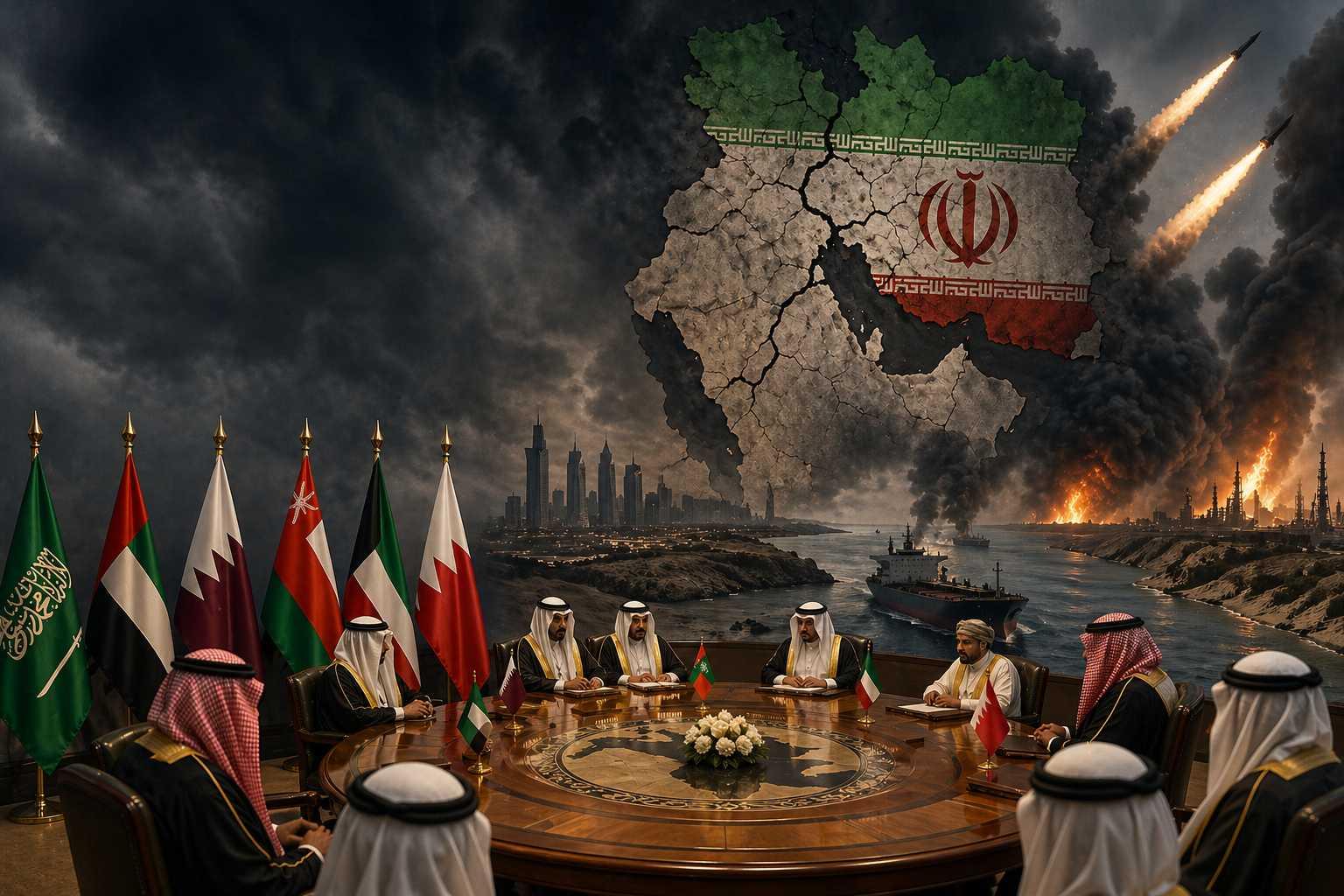
The ongoing Iran war has become one of the greatest political and strategic challenges faced by the Gulf Cooperation Council (GCC) in recent history. Although the Gulf monarchies have shown solidarity in confronting security threats, the conflict has revealed significant differences in how member states perceive Iran, Israel, and the future of regional order. While economic and defence cooperation among Gulf countries has increased under pressure, the war has also highlighted the limits of GCC political cohesion and raised questions about whether the bloc can evolve from practical coordination into a truly unified strategic alliance.
A Region United by Fear but Divided by Strategy
The GCC states have responded collectively to the dangers created by the war, particularly after Iranian missile and drone attacks threatened regional infrastructure and economic stability. Gulf leaders repeatedly emphasized that their security is interconnected and called for restraint instead of escalation. However, beneath this united public stance lies a growing divergence in how different states believe Iran should be confronted.
The UAE and Bahrain’s Hardline Position
The United Arab Emirates and Bahrain have adopted the strongest positions against Tehran. Both countries openly condemned Iran’s actions and supported tougher international responses to restore security in the Strait of Hormuz. The UAE described Iran’s conduct as a form of “economic terrorism,” while Bahrain pushed for international measures that could include military force to reopen shipping routes. This hardline approach reflects deep concerns about regional instability and threats to economic security.
Qatar and Oman Prefer Diplomacy
In contrast, Qatar and Oman have maintained a more diplomatic approach toward Iran. Historically, both countries have preserved relatively stable relations with Tehran and often served as mediators during regional crises. Despite suffering economic and infrastructural damage from the conflict, Doha and Muscat continued to stress negotiation and dialogue as the only realistic path to restoring stability. Their cautious strategy reflects a desire to avoid deeper regional polarization and prolonged military escalation.
Saudi Arabia’s Balancing Act
Saudi Arabia has attempted to position itself between these opposing camps. Riyadh initially adopted strong rhetoric against Iran and expelled Iranian diplomatic staff, yet later reopened diplomatic communication after temporary ceasefire efforts emerged. Saudi leaders appear increasingly focused on maintaining regional stability because the Kingdom’s economic transformation projects depend heavily on a peaceful environment. As a result, Riyadh has tried to balance deterrence against Iran with efforts to preserve diplomatic channels.
Growing Differences Over Israel
The conflict has also exposed contrasting Gulf attitudes toward Israel. Countries linked to the Abraham Accords, particularly the UAE and Bahrain, have generally viewed Iran as the primary regional threat. Meanwhile, Oman and Qatar have expressed stronger criticism of Israel’s military actions, accusing Tel Aviv of increasing instability in the Middle East. These differing views reveal how Gulf states increasingly disagree not only about Iran but also about the broader security architecture of the region.
The Strait of Hormuz Dispute
One of the clearest examples of GCC fragmentation concerns proposals to reopen the Strait of Hormuz, a critical global trade route. Bahrain and the UAE supported stronger US-led measures that could involve military force. On the other hand, Saudi Arabia, Qatar, and Kuwait showed greater interest in defensive or internationally coordinated approaches involving European partners. The disagreement demonstrates that GCC members still lack a common strategic framework for handling regional crises.
Economic Cooperation Continues to Grow
Despite political disagreements, Gulf countries have accelerated economic cooperation during the conflict. New trade corridors and land bridge projects are being developed to reduce dependence on vulnerable maritime routes. Saudi Arabia and the UAE, despite their rivalry, have worked together on logistics initiatives designed to maintain regional trade flows. Rail and infrastructure projects linking Gulf economies have also gained urgency as governments seek alternatives to disrupted shipping lanes.
Defence Cooperation Faces a Crucial Test
The war has created strong incentives for greater military coordination among GCC members. Shared concerns over missile and drone attacks have encouraged discussions about joint air defence systems and collective security mechanisms. Yet experts warn that technical cooperation alone will not be enough. Without a unified political vision regarding regional threats and alliances, Gulf defence integration may remain limited and fragile.
The Future of GCC Unity
Ultimately, the Iran war is testing whether the GCC can move beyond temporary coordination toward genuine strategic unity. The Gulf monarchies share common economic interests and security concerns, but their differing relationships with Iran, Israel, and global powers continue to shape competing national priorities. The outcome of this crisis may determine whether the GCC emerges stronger and more integrated or increasingly divided in a rapidly changing Middle East.
No comments yet.