Why Counting Calories May Not Help You Lose Weight – And What To Do Instead
There are other more productive way to Lose weight
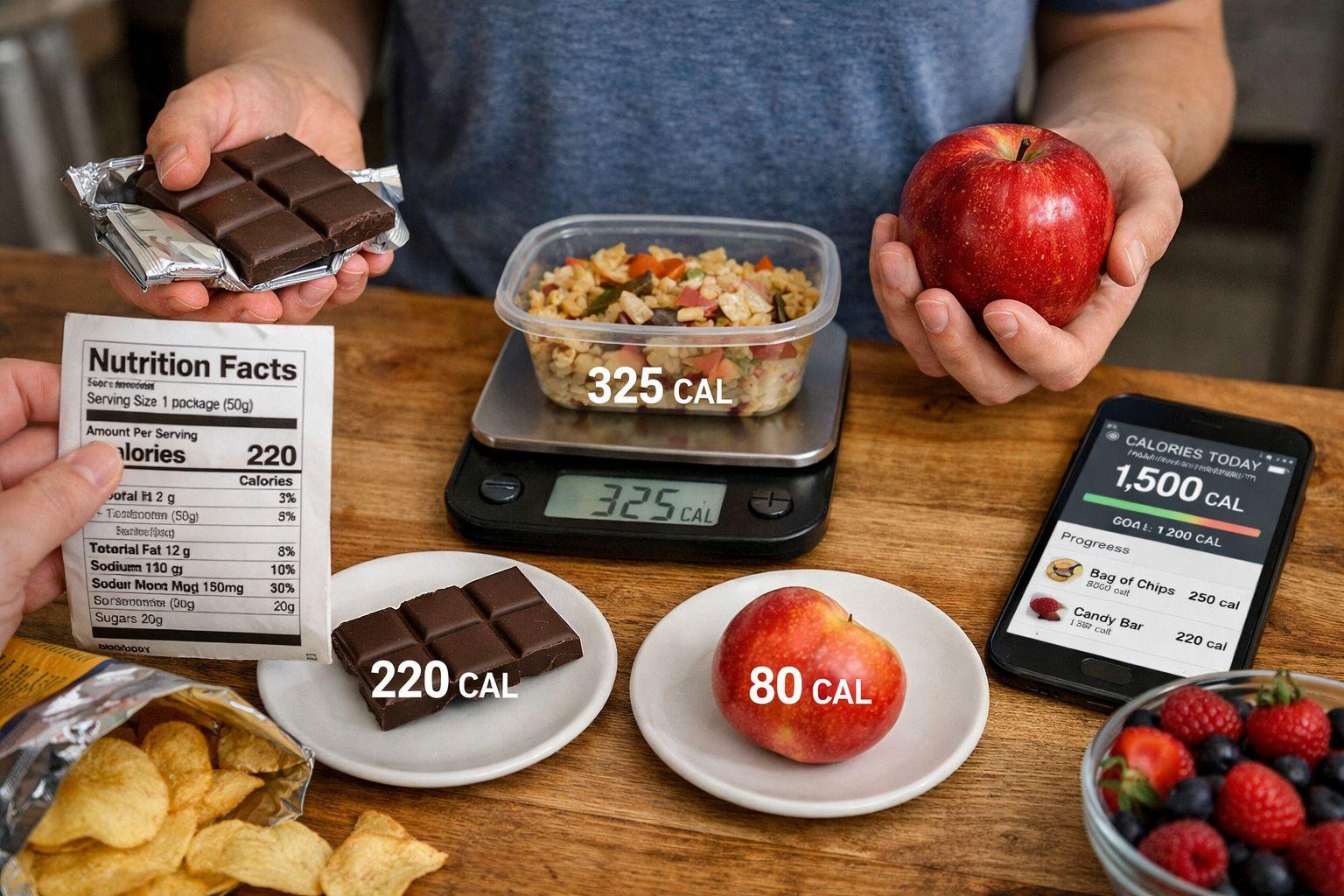
A person counting calories of apple and chocolate and some vegetables.
For decades, many people trying to lose weight have relied on a simple idea: eat fewer calories than you burn. In theory, this approach should lead to weight loss. But growing research suggests that counting calories alone may not be the most effective way to manage weight or maintain a healthy diet. Instead, scientists increasingly argue that focusing on food quality and eating habits can be far more beneficial.
The Limits of Calorie Counting
The concept of counting calories appears straightforward. Every food contains energy, measured in calories, and if you consume fewer calories than your body uses, your body should burn stored fat to make up the difference. However, in practice, this method is far less precise than it seems.
One major problem is accuracy. Measuring calories in meals can be extremely difficult. Even experts find it challenging to estimate portion sizes and determine exactly how many calories they consume each day. Small errors in measuring ingredients or estimating serving sizes can quickly add up and distort the final calorie count.
Food labels are also not perfectly reliable. Nutrition labels provide estimates, and actual calorie content can vary depending on factors such as how food is processed, prepared, or even how ripe ingredients are. As a result, people may think they are carefully tracking their calorie intake while unknowingly consuming far more or far fewer calories than they believe.
Not All Calories Affect the Body the Same Way
Another challenge with calorie counting is that calories are not all equal in how they affect the body. Two foods may contain the same number of calories but have completely different nutritional effects.
For example, a sugary snack and a piece of fruit might contain similar calories, but the fruit contains fiber, vitamins, and nutrients that help you feel fuller for longer. Sugary or highly processed foods, on the other hand, can cause rapid spikes in blood sugar followed by hunger soon afterward.
Research also suggests that diets high in ultra-processed foods may lead people to eat more overall. In one controlled experiment, participants consumed around 500 extra calories per day when eating ultra-processed foods compared with minimally processed meals—even though the meals were designed to contain similar nutrient levels.
These findings indicate that the type and quality of food people eat may play a larger role in appetite and weight gain than the exact number of calories consumed.
Biology Plays a Bigger Role Than Expected
Weight management is influenced by many biological factors beyond simple calorie arithmetic. Metabolism, hormones, genetics, and even gut bacteria can affect how the body processes food and stores energy.
For instance, trillions of microbes living in the human digestive system help break down food. The composition of these microbes differs from person to person, which means two people eating identical meals might absorb different amounts of energy from the same food.
Hormones that regulate hunger and fullness also influence how much people eat. Certain foods can trigger stronger feelings of satiety, while others may stimulate appetite. Because of these biological differences, weight loss results can vary widely even among individuals following similar diets.
Why Calorie Counting Can Be Stressful
Beyond its scientific limitations, calorie counting can also affect people psychologically. Tracking every meal, snack, and drink can become time-consuming and stressful. Some people may become overly focused on numbers rather than developing healthy eating habits.
Researchers have also noted that frequent calorie tracking may worsen unhealthy relationships with food for certain individuals. In some cases, it can increase feelings of guilt or anxiety around eating, especially for people prone to disordered eating patterns.
Because of these challenges, experts increasingly recommend a more balanced approach to nutrition.
A Smarter Way to Eat
Instead of obsessively counting calories, many nutrition specialists suggest focusing on the quality and composition of food. Diets that emphasize whole, minimally processed foods tend to promote better health and naturally regulate appetite.
Eating plenty of vegetables, fruits, whole grains, legumes, and lean proteins can help people feel satisfied without constantly tracking calorie totals. Reducing processed foods and sugary snacks can also help prevent overeating.
Regular physical activity is another important factor. Health experts recommend at least 150 minutes of moderate exercise per week to support overall wellbeing and weight management.
A Shift in Thinking About Diets
The emerging scientific consensus is that calories still matter, but they are only part of the picture. The human body is far more complex than a simple calculator that measures energy in and energy out.
By focusing on nourishing foods, balanced meals, and sustainable habits rather than strict calorie counts, many people may find it easier to maintain a healthy lifestyle in the long run.
In short, eating smarter—rather than counting every calorie—may be the key to lasting health and weight control.
No comments yet.