Italy’s FIFA World Cup Nightmare Continues as Qualification Dream Collapses Again, While Iraq and Turkiye Rejoice After Securing FIFA World Cup Qualification
Italy Fails to Qualify for the FIFA World Cup, Iraq return to the FIFA World Cup after 40 years with a playoff win over Bolivia, While Turkiye end a 24-year absence by defeating Kosovo to secure their place in the 2026 tournament.
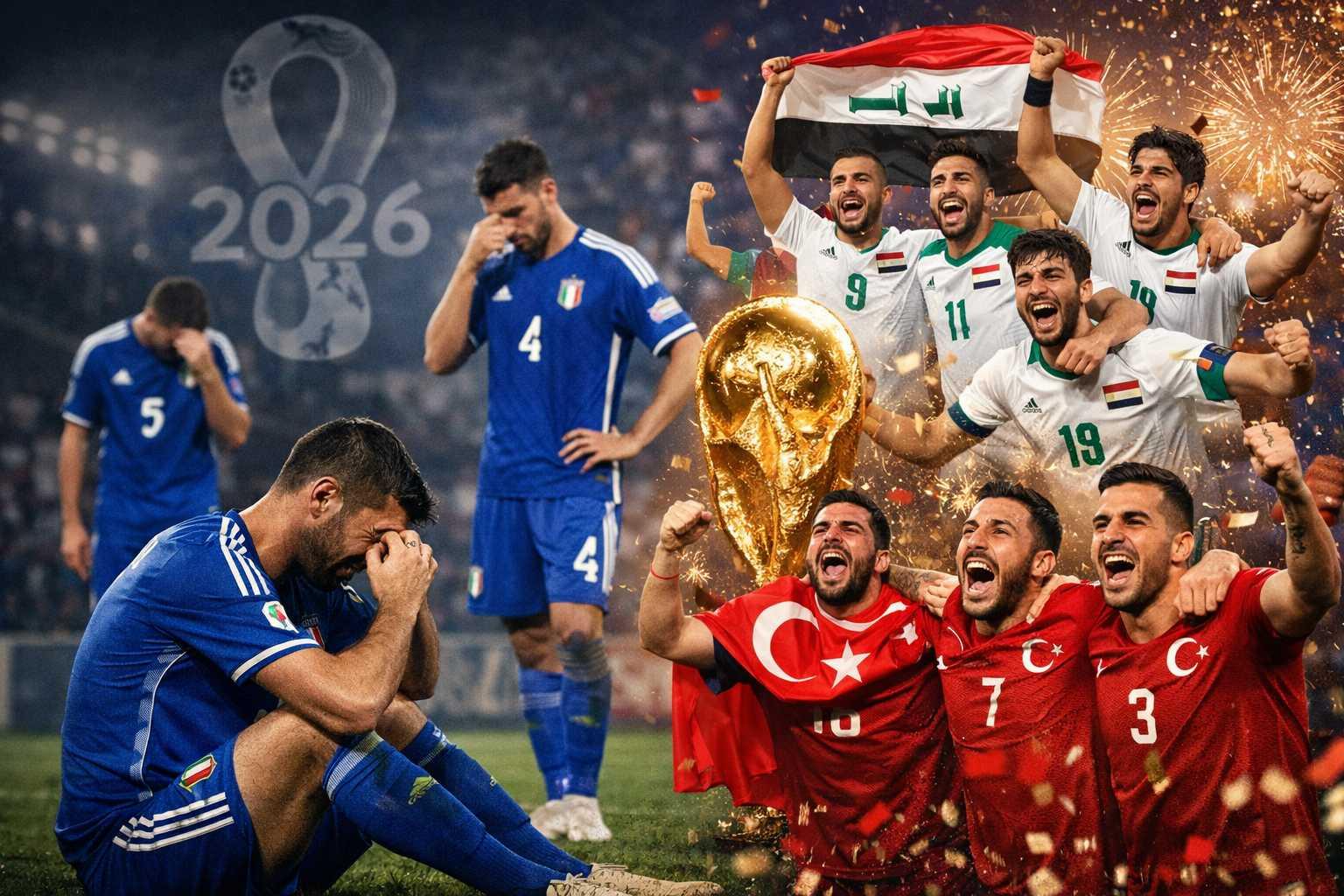
Italy’s failure to qualify for the 2026 FIFA World Cup has sparked widespread disappointment and debate across the country. Once one of football’s most dominant nations, the four-time world champions now face the painful reality of missing the tournament for a third consecutive time. The latest setback has triggered criticism of the football system, calls for reform, and deep reflection about the future of Italian football.
Playoff Heartbreak Ends Italy’s Hopes
Italy’s hopes of reaching the 2026 World Cup ended in dramatic fashion after a tense playoff against Bosnia and Herzegovina. The match finished 1–1 after regulation time, forcing a penalty shootout where Bosnia triumphed 4–1. The defeat confirmed Italy’s elimination and secured Bosnia’s place in the tournament. The result was particularly painful because the Azzurri had taken the lead earlier in the game, raising hopes among supporters. However, the match turned after key moments shifted the momentum in Bosnia’s favor.
Red Card Changes the Match
A major turning point came before halftime when Italy defender Alessandro Bastoni received a red card for a last-man foul. Reduced to ten players, Italy struggled to maintain control of the game. Bosnia capitalised on the advantage and eventually equalised late in the match, forcing extra time and then penalties. The numerical disadvantage placed enormous pressure on the Italian team, and their inability to regain composure proved costly during the shootout.
Fans and Media React With Shock
The defeat triggered strong reactions across Italy. Newspapers described the outcome as a “World Cup curse,” reflecting the disbelief among fans that such a historically successful football nation could miss three consecutive tournaments. Supporters expressed frustration and sadness, with many struggling to understand how a country that once dominated world football could suffer such repeated failures. Social media and public discussions were filled with disappointment and anger.
Political Leaders Demand Answers
Italy’s sporting authorities and political leaders quickly joined the debate. Sports Minister Andrea Abodi acknowledged the seriousness of the situation and called for reflection on the problems within the national football structure. Some officials and commentators have even demanded leadership changes within the Italian Football Federation, arguing that systemic issues have been ignored for too long.
A Historic Decline for a Football Giant
Italy’s absence from the World Cup is particularly shocking given the nation’s proud history in the tournament. The country has won the World Cup four times—in 1934, 1938, 1982 and 2006—and was once considered one of football’s most formidable powers. Yet since lifting the trophy in 2006, Italy’s World Cup performances have steadily declined. They were eliminated in the group stage in 2010 and 2014 before failing to qualify for the 2018 and 2022 tournaments.
Calls for Reform in Italian Football
Experts and analysts now argue that the crisis goes beyond a single match or coaching decision. Critics point to deeper structural problems, including weaknesses in youth development and inconsistent performances at the club level. Some believe Italy must overhaul its development system and invest more heavily in nurturing young talent if it hopes to restore its former status in international football.
A Painful Moment for Italian Fans
For millions of Italian supporters, the latest elimination is more than a sporting disappointment—it is a cultural blow. Football holds a central place in Italian identity, and repeated World Cup absences have left many fans feeling disconnected from the sport’s biggest stage. As other nations prepare for the 2026 tournament, Italy will once again be forced to watch from home, intensifying the debate about how to rebuild the national team.
Uncertain Future for the Azzurri
Italy now faces a crucial period of rebuilding. With the next World Cup still four years away, the country’s football leaders must decide how to revive a team that once symbolised excellence. Whether through leadership changes, youth development reforms, or strategic restructuring, the challenge ahead is immense. What remains clear is that Italy’s footballing identity is being tested like never before.
Iraq End 40-Year Wait for World Cup
Iraq secured the final spot at the 2026 FIFA World Cup after defeating Bolivia 2–1 in a tense intercontinental playoff in Monterrey, Mexico. The victory marked a historic milestone for Iraqi football, bringing the national team back to the global tournament for the first time since their lone appearance in 1986. The result was celebrated widely among Iraqi supporters, who had waited decades to see their team return to the world stage.
Early Goal Sets the Tone
The match began brightly for Iraq as striker Ali Al-Hamadi scored an early goal in the ninth minute. Rising above the defense, he headed home from a corner delivered by Amir Al-Ammari to give his side the lead. Bolivia eventually responded before halftime when Moises Paniagua scored after controlling a pass from Ramiro Vaca and firing into the roof of the net. The equaliser briefly shifted momentum toward the South American side.
Captain Hussein Secures Victory
Iraq regained the lead shortly after the break. Substitute Marko Lawk-Farji delivered a cross into the box that was met by captain Aymen Hussein, who calmly finished to restore his team’s advantage. Bolivia pressed hard in the closing minutes in search of an equaliser that would have forced extra time. However, Iraq’s defence held firm through a tense period of stoppage time to secure the historic victory.
Difficult Journey to Qualification
The qualification campaign was particularly challenging for Iraq. Regional conflict and travel disruptions complicated preparations, forcing the team to undertake a long journey to reach Mexico for the playoff. Despite the difficulties, head coach Graham Arnold praised his players’ determination and said the achievement would bring joy to millions of Iraqis. He expressed hope that the team could “shock the world” when the tournament begins.
Tough Group Awaits Iraq
Following qualification, Iraq were placed in a challenging World Cup group alongside France, Senegal and Norway. The draw sets up a difficult path for the Middle Eastern side, but players and supporters remain optimistic about representing their nation after such a long absence. For Iraq, simply reaching the tournament is already seen as a major achievement and a proud moment for the country.
Turkiye Finally Return to the World Stage
Elsewhere, Turkiye ended a 24-year wait to return to the World Cup after defeating Kosovo 1–0 in a European playoff. The decisive goal came from Kerem Akturkoglu in the 53rd minute, sending Turkish fans into celebration. The qualification marks Turkiye’s first appearance at the World Cup since their memorable 2002 campaign, when they reached the semi-finals.
Celebrations and New Hopes
Following the victory, celebrations erupted across Turkiye as supporters filled streets waving flags and cheering their national team. Players expressed pride in ending the long drought and hoped their success would inspire a new generation of football fans. With qualification secured, Turkiye now look forward to competing in the 2026 tournament against strong international opponents and building on their proud football history.
No comments yet.